
Hello world!
20th Oct
Welcome to WordPress. This is your first post. Edit or delete it, then start writing!

When you picture a career supporting young people in schools, you might assume there’s one particular route you need to take to get there.
The reality is very different.
Some of the skills that make someone great at supporting young people are developed across a whole range of careers. Building relationships, managing challenging behaviour, motivating others, setting boundaries and remaining calm under pressure can all provide valuable foundations for a career in behaviour and inclusion.
At Think for the Future, our Behaviour & Inclusion Mentors support young people who may be disengaged from education, helping them build social and emotional resilience, improve behaviour and achieve positive academic and personal outcomes. Our mentors work with young people through group and one-to-one support across different types of in-school provision.
So, could your current role have already prepared you for your next career move?
Here are five backgrounds that could give you a great foundation.
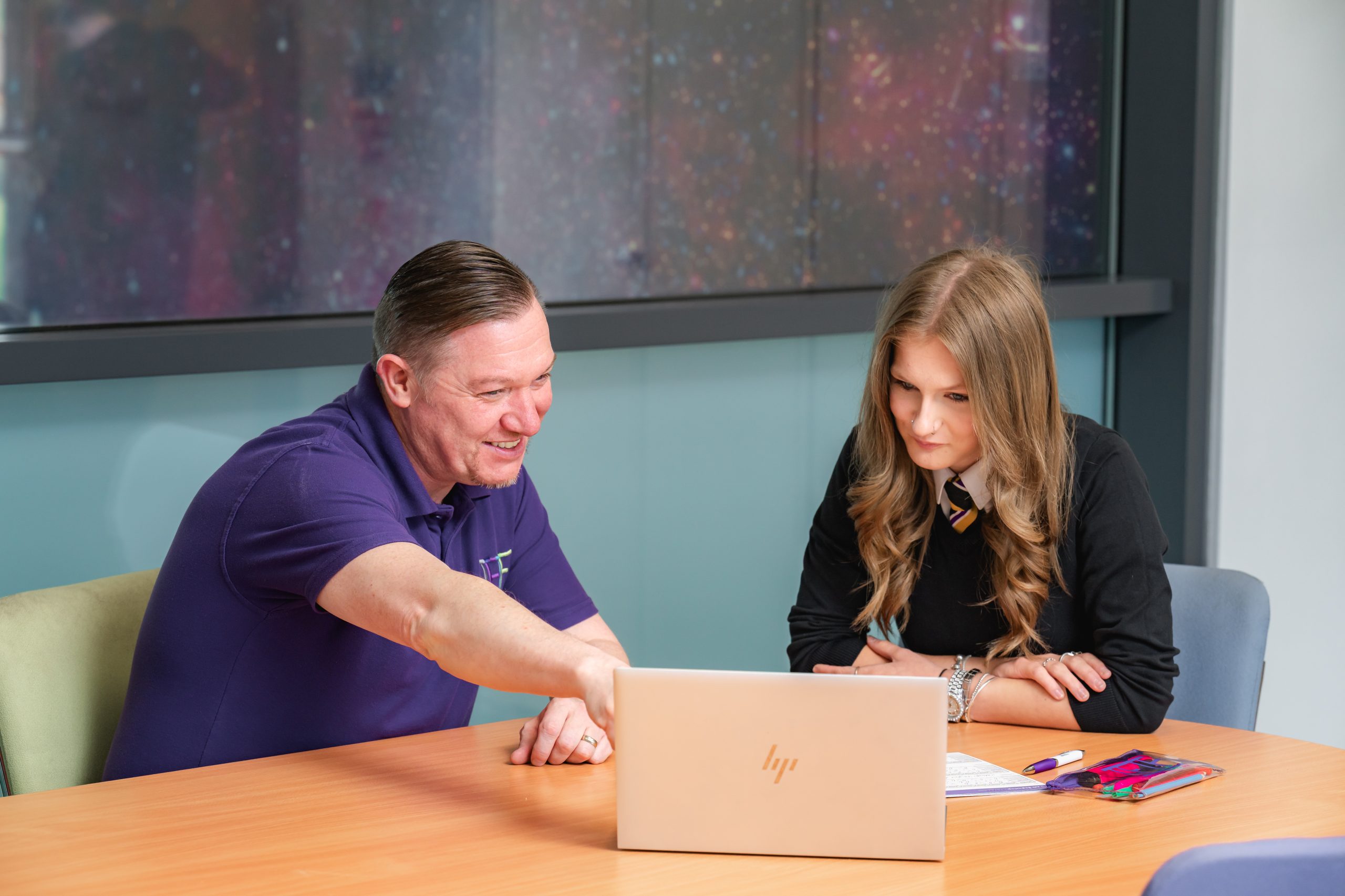
If you’re currently working as a Teaching Assistant, you’ve probably already developed many of the skills needed to succeed in behaviour and inclusion.
You understand how schools operate, you’ve worked directly with pupils, and you’ve seen first-hand how behaviour, confidence and engagement can affect a young person’s experience of education.
You’ve likely also had experience adapting your communication, reinforcing expectations, supporting learning and building relationships with pupils who need additional encouragement.
A behaviour and inclusion role could be a natural next step if you’ve discovered that the part of your job you enjoy most is working directly with pupils who need additional support.
Instead of being primarily focused on classroom learning, you can put even greater emphasis on the relationships, behaviours and wider barriers that influence a young person’s ability to succeed.
Great sports coaching and great mentoring have more in common than you might initially think.
As a coach, you’re used to motivating young people, establishing expectations and helping individuals push themselves beyond what they thought they could achieve.
You’ll also know that different young people respond to different approaches. One person might need encouragement, another might benefit from clear challenge, and someone else may simply need an adult who consistently believes in them.
These relationship-building skills are incredibly relevant to mentoring.
A good coach isn’t simply focused on improving performance. They help develop confidence, resilience, teamwork, self-discipline and ambition.
Those same qualities can make a huge difference when supporting young people within education.
If you’re already working in youth services, mentoring or community programmes, a move into behaviour and inclusion could allow you to bring your relationship-building skills into an educational environment.
Youth workers often have extensive experience engaging young people who may be reluctant to trust adults or participate initially.
You may already be comfortable discussing difficult topics, maintaining professional boundaries, encouraging positive choices and helping young people navigate challenges in their lives.
Those skills are particularly valuable when working with young people who have become disengaged from education.
Within Think for the Future’s provisions, the ability to create strong and lasting rapport with young people is an important part of delivering effective support.
Perhaps you’re already working within a school but want your next role to give you greater responsibility, development or progression.
Experience in pastoral or behaviour support can provide an excellent foundation.
You may already have experience supporting behaviour, managing difficult conversations, responding to escalations, working with other professionals and helping pupils reflect on their choices.
More importantly, you’ll understand that effective behaviour support isn’t simply about responding when something goes wrong.
It’s also about consistency, relationships, prevention and giving young people the skills they need to respond differently in the future.
That experience aligns particularly well with the work taking place within our provisions, where mentors can provide classroom behaviour support, deliver social and emotional resilience content and work one-to-one with young people.
If you’ve worked as a Cover Supervisor, you already understand one of the most important environments in which our work takes place: the classroom.
You’re used to stepping into different situations, managing groups of young people, establishing expectations and finding ways to engage pupils with very different personalities, motivations and needs.
You’ve probably also become skilled at thinking on your feet. When you’re supporting a class you may not know particularly well, the ability to quickly establish credibility, remain calm and adapt your approach can make all the difference.
Perhaps you’ve found that the part of your role you find most rewarding isn’t simply keeping pupils on task.
Maybe it’s building relationships.
Perhaps it’s working with the student who initially doesn’t want to engage.
Or maybe it’s seeing a young person’s behaviour or confidence begin to change because someone has taken the time to understand and support them.
If those are the parts of your role you enjoy most, a career in behaviour and inclusion could allow you to build on them.
At Think for the Future, our Behaviour & Inclusion Mentors work directly with young people in schools, supporting them to build social and emotional resilience, improve behaviour and achieve positive outcomes. Our roles also involve no lesson planning or marking.
The adaptability, behaviour management, confidence and relationship-building skills you’ve developed as a Cover Supervisor could therefore provide a strong foundation for taking the next step into a dedicated behaviour and inclusion role.
You might recognise your current role on this list. Or your experience might come from somewhere slightly different.
Either way, what’s important isn’t simply the title you’ve held.
It’s what you’ve learned from working with young people.
Can you build strong relationships?
Can you engage someone who initially doesn’t want your support?
Can you remain calm when behaviour becomes challenging?
Can you establish boundaries while still being relatable?
Can you motivate a young person who has stopped believing they can succeed?
Those are the sorts of skills that can make someone incredibly effective in behaviour and inclusion.
Your next role doesn’t necessarily have to take you away from the experience you’ve already built. It could be an opportunity to take those skills further.
At Think for the Future, our mentors work with young people through different in-school provisions, with opportunities to continue developing their experience and skill set across those provisions. Our recruitment materials also identify progression routes beyond mentoring, including team leadership and Inclusion Centre management.
So, whether you’re currently supporting pupils in a classroom, coaching a sports team, working with young people in the community or helping students overcome behavioural and pastoral challenges, you may already have a strong foundation for your next step.
If you have experience working with young people and are looking for an opportunity to build on it, a career with Think for the Future could be worth exploring.
Our work is focused on helping young people overcome barriers, develop resilience, improve behaviour and achieve positive outcomes.
You’ve already built the experience. Now it might be time to think about where it could take you next.
Explore our current opportunities and discover how you could build your career with Think for the Future.